
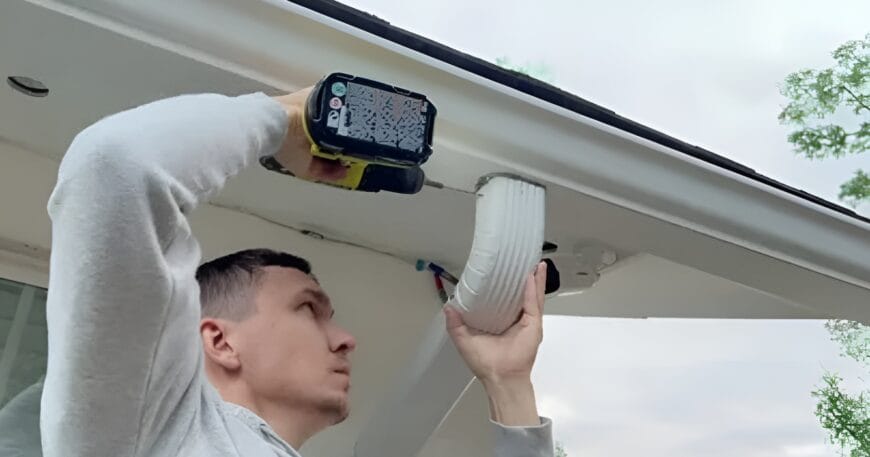
Gutters sit quietly at the edge of your roof, doing their job without much attention. Until they don’t! When water starts landing where it shouldn’t, the cause is rarely mysterious. It’s usually tied to how the system was installed in the first place. This is why understanding the gutter installation process matters more than most people realize.
Homes in Anaheim, CA, deal with a unique mix of long dry spells and sudden downpours. That contrast exposes weak drainage fast. This guide breaks down what actually happens during installation, step by step, so you know what’s being done and why it matters.
Why the Process Matters as Much as the Product
It’s easy to focus on materials. Aluminum, steel, and seamless designs. But even the best gutter won’t perform if it’s installed poorly.
A reliable gutter installation process ensures water moves where it should—away from your roofline, siding, and foundation. It protects fascia boards, prevents erosion, and reduces long-term repair costs. For homes in Anaheim, CA, professional Gutter Installation in Anaheim, CA is crucial, as small installation mistakes often lead to big problems over time.
Step One: Inspection Comes First (Always)
Every proper installation starts with an on-site inspection. This isn’t a formality. It’s where problems are identified before they become expensive.
Installers examine the roof edge, fascia condition, pitch, and existing drainage setup. Measurements are taken carefully. This stage defines all the following gutter installation steps, because no two homes, even on the same street, handle water the same way.
This is also when installers look for early signs of wear that may affect installation quality.
Step Two: Choosing the Right Gutter Setup
Once measurements are complete, the conversation turns to system design. Size, material, and layout are discussed based on how your home actually sheds water, not what looks good on paper.
In many homes, this step includes evaluating gutter installation and repair guide and options. Sometimes repairs are enough. Other times, they only delay the inevitable. The goal is to choose a solution that lasts, not one that creates repeat visits.
Step Three: Removing Existing Gutters Safely
If old gutters are being replaced, they’re removed with care. Pulling them off too quickly can damage fascia boards or roof edges, creating new issues before installation even begins.
Fasteners are removed cleanly. Old sealant is stripped away. The underlying surface is inspected closely. This part of the gutter installation process often reveals why the previous system failed in the first place.
Step Four: Preparing the Fascia and Roofline
Before new gutters go up, the structure behind them has to be solid. Any signs of rot, warping, or moisture damage are addressed.
This step becomes especially important when homes have experienced winter gutter damage. Moisture trapped behind old systems can weaken wood quietly. Fixing that now prevents sagging and future failure. Skipping preparation is one of the most common and costly mistakes.
Step Five: Installing the Gutters Correctly
This is where experience shows. Gutters are mounted using properly spaced hangers, set to support weight during heavy rainfall. A precise slope is created so water flows smoothly toward the downspouts. Too flat, and water pools. Too steep, and overflow becomes a problem.
This stage defines the success of the entire installation process, which is why homeowners choose professional gutter installation instead of risking uneven alignment or premature leaks.
Step Six: Downspout Placement and Drainage Control
Downspouts determine where water ends up. Poor placement sends runoff straight back toward the foundation.
Installers position downspouts based on yard layout, walkways, and drainage patterns. As a result, extensions or underground solutions may be recommended, depending on the property. In Anaheim, CA, neighborhoods, in particular, this step often prevents long-term soil erosion and foundation issues.
Step Seven: Sealing, Testing, and Final Checks
All joints, corners, and end caps are sealed carefully. Once complete, the system is tested with running water to confirm proper flow.
Installers check for leaks, secure attachment, and consistent drainage. Only after everything performs as expected is the gutter installation process considered complete.
Gutter Repair vs Replacement: Knowing When to Choose What
Homeowners often wonder whether to repair or replace their gutters. However, it’s not always easy to decide. Repairs are fine if the damage is small and, in general, the gutters are still solid. On the other hand, replacement is better if they sag, keep leaking, or don’t line up properly with the roof. A good installer will explain the difference clearly, without trying to sell you something you don’t need.
The Role of Ongoing Maintenance
Even a perfectly installed system won’t stay effective without care. Regular gutter maintenance keeps debris from blocking water flow. This helps catch minor issues early.
In Anaheim, CA, cleaning gutters before and after the rainy season is usually enough to keep systems performing as intended. Neglect is what shortens lifespan, not age alone.
Conclusion
A good gutter installation really comes down to planning things properly and doing the work the right way. When each step is handled with care, as a result, gutters just work. They move water away, stay out of sight, and, most importantly, don’t cause problems later on. That’s exactly what you want in the end.
If you’re located in Anaheim, CA, and thinking about installing new gutters, fixing existing ones, or replacing an older system, Malibu Gutters Inc. can take a look. We focus on honest advice, clean work, and results that hold up over time. Contact us to schedule an inspection. We make sure your drainage is handled correctly from the beginning.
Frequently Asked Questions
Q: How long does gutter installation usually take?
Ans: Most residential installations are completed in one day. But it depends on roof size and access.
Q: Can new gutters really prevent home damage?
Ans: Yes. Properly installed gutters control runoff. This helps protect siding, foundations, and landscaping.
Q: How often should gutters be cleaned?
Ans: Gutters must be cleaned at least twice a year, with more frequent Gutter Cleaning needed if your property has heavy tree coverage.